 Boracay Tours Package
Puka Beach, Boracay: What's There and How to Reach It
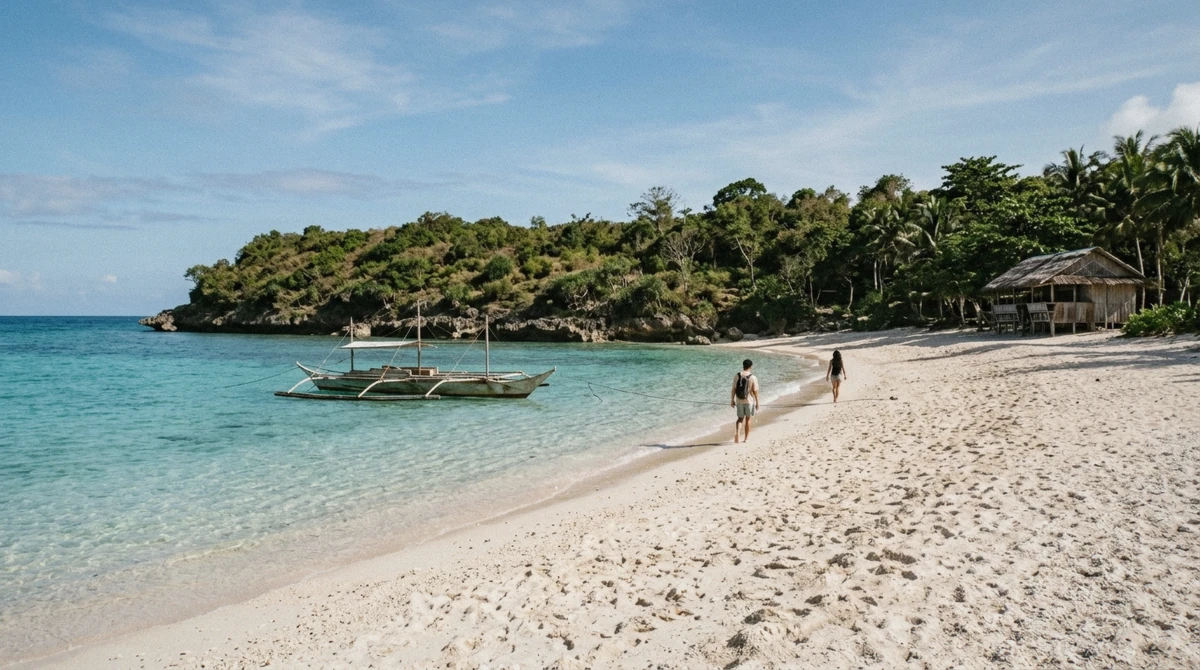
Puka Beach Boracay sits at the northern tip of the island, roughly 800 metres of coarse white shell sand named after the puka shells that fed the 1970s necklace craze. Entry is free, no gate, no ticket, and for most visitors it is the first stop on an island-hopping boat rather than a beach they plan a whole day around on its own. The trade-off for the quiet is real: the water runs deeper than on White Beach, the waves carry more force, and there are no lifeguards. Below is what actually gets you there, what a tricycle and a boat cost against each other, and how Puka compares to the beach outside most hotels.
Quick answer
Puka Shell Beach is Boracay's northern shell-sand beach, reached by a 15 to 20 minute tricycle ride from Station 1 or as the first stop on an island-hopping boat, and it costs nothing to walk onto, there is no gate and no ticket. What it does not have is White Beach's calm water or its lifeguards, so the appeal is the open sand and the shells underfoot, not a swim you take without checking the surf first.
Key takeaways
- A private tricycle from Station 1 runs about ₱150 for 15 to 20 minutes; it's also the first stop most island-hopping boats make. Compare the six Boracay packages that can get you there.
- The private boat compared on this site, the private island-hopping trip, swaps this stop to Ilig-Iligan Beach when the north end is too choppy
- No resorts, no rented sunbeds, a handful of shacks sell drinks and shells, so bring your own mat and shade
- The water is deeper than at White Beach and there are no lifeguards; this is not the beach for a first swim of the day
- Most boats add a paid stop at Crystal Cove after Puka, at roughly ₱300 a head
- Which end of the island is calm changes with the season. See the best time to visit
What Puka Beach Actually Is, and Why It's Called That
Shells, not sand grains
Puka Beach runs along the northern end of Boracay for roughly 800 metres, and the texture underfoot is the reason for the name. Instead of the fine powder sand White Beach is known for, Puka is coarse, made up largely of small perforated shells, puka shells, that wash up along this stretch more than anywhere else on the island. Those shells had a moment in the 1970s, when puka-shell necklaces became a global beach fashion item, and Filipino vendors strung and sold them by the roadside for years after.
The beach kept the name long after the trend passed. Walking the sand today still turns up shells worth picking through, though most of the obvious ones near the entry points have already been collected.
No gate, no ticket
There is no admission fee to walk onto Puka Beach and no ticket booth checking anyone at the entrance. That puts it apart from the other named stops on a typical island-hopping route, where Crystal Cove charges at its gate. Puka is simply public beach, open the way any Philippine shoreline legally has to be. That also means nobody is managing the sand day to day the way a paid attraction manages its grounds.
There's no gate staff to ask about conditions, no posted notice board, and no fixed opening or closing hour, the beach is there around the clock, though nobody has a reason to be on it after dark since there's no lighting and nothing open.
Getting There: Tricycle, Boat or Island-Hopping Stop
Three realistic ways to reach Puka, and they suit different trips.
Pick the one that matches your day
A private tricycle is the fastest door-to-door option if Puka is the only thing on your morning. An island-hopping boat makes more sense if you also want the snorkel stops and the paid islands on the same outing, see the private island-hopping trip we compared in full. Walking is not a realistic option from the main tourist strip; the distance and the state of the road rule it out for most visitors.
| Method | Cost | Time | What it suits |
|---|---|---|---|
| Private tricycle from Station 1 | About ₱150 | 15 to 20 minutes | Going just for the beach, on your own schedule |
| Shared tricycle | Lower per head, variable | 15 to 20 minutes plus wait for other riders | Solo travellers watching the budget |
| Island-hopping boat stop | Included in the package price | First stop, roughly 30 to 45 minutes on the sand | Pairing Puka with snorkelling and the paid islands |
| Walking from the main strip | Free | Well over an hour, poor road for most of it | Not recommended |
What the tricycle fare does and doesn't include
The ₱150 private fare covers the ride itself, nothing else. It has nothing to do with the ₱500 stack of arrival fees every visitor pays once, at Caticlan Jetty Port on the way in, that's a separate charge, explained here, and it applies whether or not you ever set foot on Puka. If you're arriving by island-hopping boat instead, the transport cost is folded into whichever package you booked, and the beach stop itself still costs nothing extra.
A shared tricycle undercuts the private fare, but the saving comes with a wait: drivers typically hold the vehicle until three or four seats fill, which can add ten or fifteen minutes on a slow morning. For a family or a small group already splitting a private ride, the per-head cost usually lands close enough to a shared seat that the wait isn't worth it. For a solo traveller with no plans on a fixed schedule, it's the cheaper way to go.
What's on the Beach, and What Isn't
A working beach, not a resort strip
There are no resorts built directly on Puka Beach, which is most of why it still feels undeveloped next to White Beach's wall of hotels. What's there instead is a handful of small shacks selling drinks, grilled snacks and strings of shells to buy rather than collect yourself. Nobody rents sunbeds or umbrellas here the way vendors do at Station 2, so a mat, a hat and your own shade are worth carrying in.
The one paid activity on the sand itself is a crystal-kayak photo session, a clear-bottomed kayak paddled out a short way for pictures, priced from about ₱250 per person for 15 to 20 minutes. It's a boat-day add-on rather than something to plan a trip around. What you also won't find: restrooms with running water at every turn, a lifeguard tower, or the row of massage mats and hair-braiding stalls that line White Beach.
A few of the drink shacks have basic toilets for customers, and that's usually the extent of it. Anyone used to the density of the main strip should expect Puka to feel closer to a stop on a boat itinerary than a beach with its own infrastructure, which, for most visitors, is exactly the appeal.
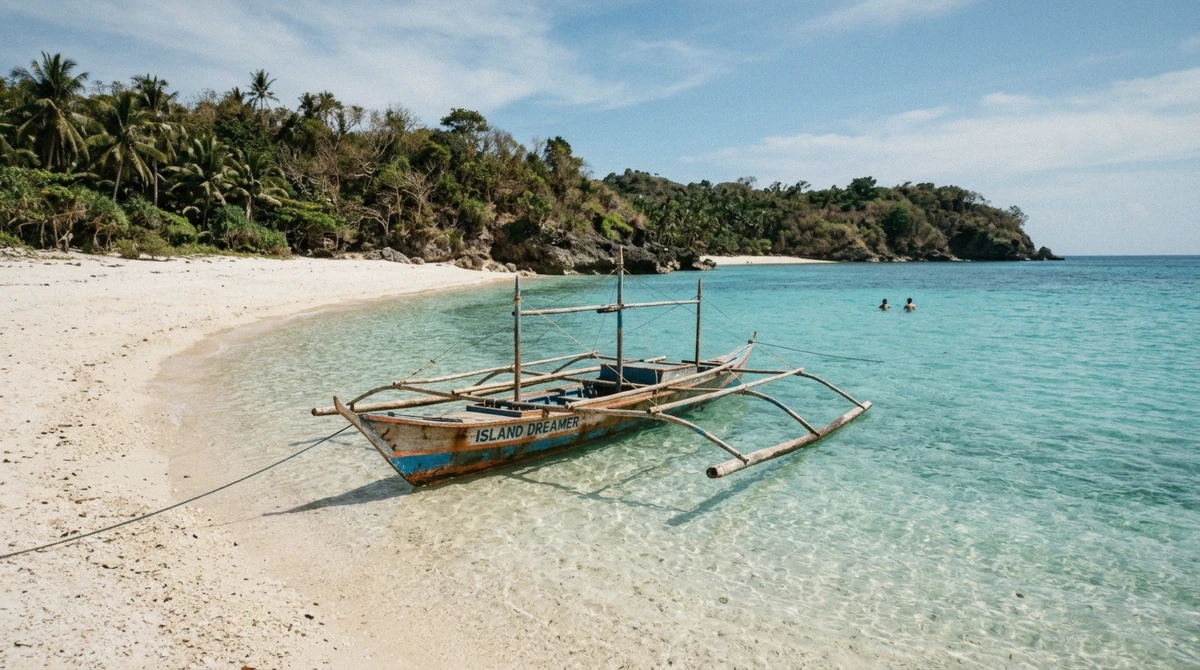
The boats that stop here rarely stay more than 45 minutes before moving on to the next point on the route.
Swimming and Safety
Read the surf before you're in it
The water off Puka runs noticeably deeper than the shallow shelf at White Beach, and the waves carry more force since the beach faces open water rather than the sheltered bay. There are no lifeguards posted here, unlike the patrolled stretch in front of the main hotel strip, so anyone swimming does so on their own judgment. How rough it gets depends on which way the wind is blowing that month. This end of the island takes the wind first, so the same stretch of sand can be glassy in January and genuinely choppy in August, the Amihan and Habagat pattern that governs which side of Boracay is calm at any given time of year.
Ask whoever brought you, whether that's a tricycle driver or a boat crew, how the water looks that day before wading in past your knees. This is also why boats build in a fallback. When conditions at the north end are working against them, the crew simply redirects to Ilig-Iligan Beach a short distance south, where the shoreline sits at a slightly different angle to the wind. Nobody on a booked island-hopping trip needs to negotiate this themselves, it's a call the boat crew makes before you ever reach the water, but anyone arriving independently by tricycle should be prepared to find the surf different from what a photo online promised.
Puka Beach vs White Beach
Two different beaches, not two versions of the same one
The comparison people actually want to make before choosing where to spend a morning.
| Feature | Puka Beach | White Beach |
|---|---|---|
| Sand | Coarse, shell-heavy | Fine, powder-soft |
| Development | No resorts on the beach itself | Wall-to-wall hotels and restaurants |
| Swimming safety | Deeper water, no lifeguards | Shallow, patrolled by lifeguards |
| Crowds | Light outside boat-stop windows | Busy most of the day, all seasons |
| Vendors | A few shacks, shell sellers | Continuous row of shops, bars, tour desks |
| How you get there | Tricycle or boat stop | You're already standing on it |
Where Puka Beach Sits on the Island
Puka anchors the far north of Boracay, well past the White Beach hotel strip. The other pins show how it fits against the beaches and stops most boats also visit. Tap a pin for what's there and, where relevant, how it connects to Puka.
Best Time of Day, and the Sunset Argument
Morning light, not sunset
Puka faces roughly north, not west, so it isn't the sunset spot Boracay is famous for. That is White Beach, where the sun drops straight into the water in front of Station 1. What Puka offers instead is a quiet morning: arrive before the first island-hopping boats land, usually before mid-morning, and the sand is close to empty. By the time several boats have stopped in succession, the beach fills with day-trippers for the length of each visit and then empties again as they move on.
If a tricycle brought you rather than a tour boat, timing your visit between those windows, mid-morning after the first wave, or later in the afternoon, gets you the beach at its quietest. Some visitors do try to catch sunset here anyway, usually chasing photographs of the shell sand in warm light rather than the sun itself dropping into the sea. It works reasonably well as a side effect of the angle, but nobody should build a whole evening plan around a Puka sunset the way they would at Station 1. If the sunset is the point of the day, save it for White Beach and treat a Puka visit as a morning or early-afternoon errand instead.
What to Bring
There's nothing to rent
Because Puka has no beach-chair or umbrella rental business the way White Beach does, what you carry in is what you have for the visit.
- A mat or towel to sit on, no sunbeds for rent here
- Your own shade: a hat, a light cover-up, or an umbrella
- Reef-safe sunscreen, reapplied, there's no shade near the water
- Cash for the shacks and for the crystal-kayak session if you want it
- Water shoes or sandals with a strap, useful on the coarser sand and rockier patches
- A dry bag if you're arriving by boat and don't want a soaked phone
Puka Beach: the Questions People Ask
Why is Puka Beach called Puka Beach?
It's named for the puka shells that wash up along this stretch more than anywhere else on Boracay, small perforated shells that fed a global necklace fashion in the 1970s. The name stuck long after that trend faded.
How do you get to Puka Beach from Station 2?
A private tricycle from the main strip runs about ₱150 and takes 15 to 20 minutes north along the coast road. It's the same ride whether you start from Station 1, 2 or 3, since Puka sits well past all three at the island's northern tip.
Is there an entrance fee for Puka Beach?
No. Puka is free to enter, there's no gate and no ticket, unlike the paid stop at Crystal Cove that most island-hopping boats add afterward.
Is Puka Beach good for swimming?
It's swimmable, but the water runs deeper than at White Beach and there are no lifeguards. Waves also pick up when the wind is blowing onto this side of the island, so check conditions with a local before wading in past your knees.
What station is Puka Beach in Boracay?
None of the three. Puka sits north of Station 1, past Diniwid Beach, and isn't counted among the numbered stations that run along White Beach's hotel strip.
Is Puka Beach worth visiting on its own, or only as part of a tour?
Either works. A private tricycle gets you there for a self-planned visit with no boat schedule to follow; going as part of an island-hopping route means it's paired with snorkelling and the paid islands in one outing.
Can you buy real puka shells at Puka Beach?
Yes, from the vendors and shacks along the sand, strung into necklaces and bracelets much the way they were sold during the 1970s trend that gave the beach its name. Loose shells still wash up on the sand itself, though the most obvious ones near the entry points have usually already been picked over by earlier visitors.
Puka rewards a low-key visit more than a planned-out one. Go for the texture of the sand, the shells, and a swim you take seriously rather than casually, and treat the rest of the north end, Ilig-Iligan when the wind is up, Crystal Cove if your boat stops there, as the bonus around it.