 Boracay Tours Package
Best Time to Visit Boracay: Month-by-Month Guide
The best time to visit Boracay is November to May, when the Amihan wind keeps the sky dry and White Beach flat calm. December and January are the strongest weeks inside that run, combining the driest air with water that hasn't yet turned green with lumot. The window to avoid, if a cancelled boat day would wreck your trip, is July to October, when the Habagat monsoon and the region's tropical-cyclone season overlap. The two things people conflate, dry weather and clean water, do not actually line up the same months, and that gap is the whole story below.
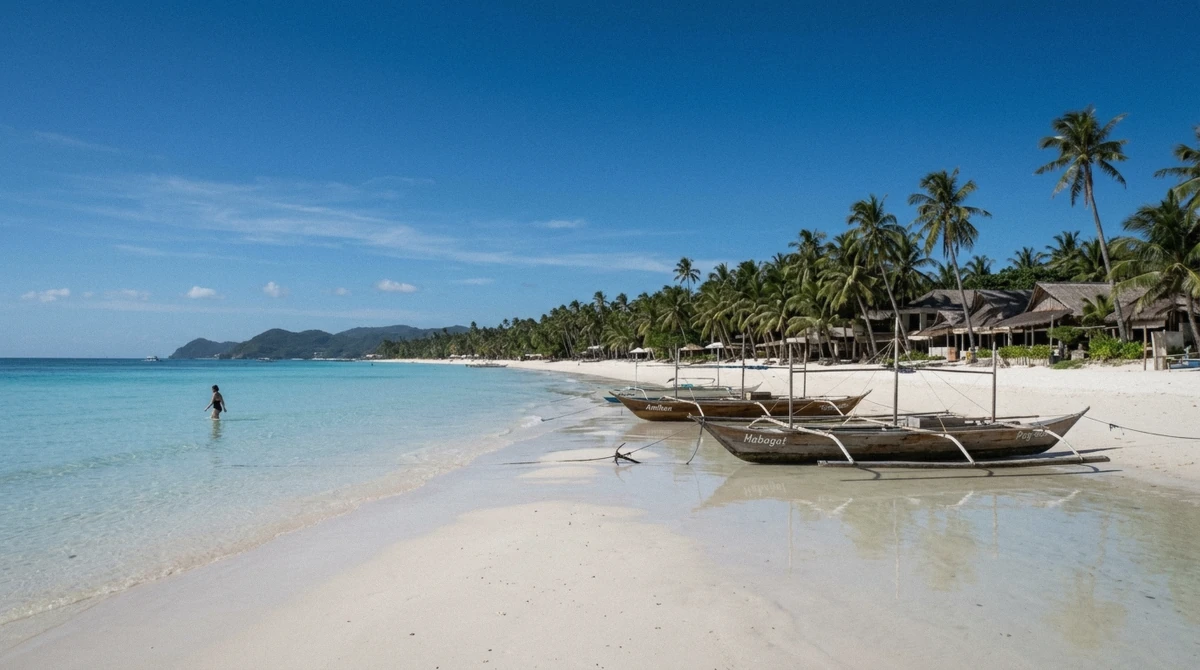
Quick answer
November to May is dry season in Boracay, driven by the Amihan wind, and December and January are the cleanest, calmest weeks inside it. Lumot, the green algae, complicates the back half of that window: it typically lands on White Beach from February to May, which means the driest months and the cleanest water are not the same months. July to October brings the Habagat monsoon and the region's cyclone season, when rough seas cancel boat-based tours outright.
Key takeaways
- December and January: driest air, calmest sea, lumot hasn't arrived. See the full season breakdown
- February to May: still dry and warm, but lumot typically reaches the White Beach shoreline
- June to October: cheapest rates, but Habagat rain and cyclone risk make a cancelled boat day a real possibility
- Amihan keeps the wind on Bulabog, which is why kitesurfers go December to March while White Beach stays flat
- Peak pricing runs mid-December to mid-May, worst around 23 December to 2 January and Holy Week
- Five of the six tour packages compared on this site cancel free up to 24 hours out; the jet ski does not
The Short Answer: Which Months, and Who They Suit
Two different questions, two different answers
"When's the best time to visit Boracay" is really two questions wearing one sentence. If the question is about weather, the answer is Amihan season, November through May, when the north-east wind keeps rain away and the sea in front of White Beach stays flat. If the question is about water colour, the honest answer narrows to roughly June through January, because lumot moves in on top of the second half of the dry season and stays until the rains flush it out again.
Most visitors who ask "when should I go" actually want a single month, so here is the compromise: December and January give you dry-season weather and pre-lumot water at the same time. Everything from February onward is a trade between clear skies and the algae question below, and everything from June onward is a trade between low prices and a real chance of a cancelled boat day. Who each window suits changes the answer more than the calendar alone.
A first-time visitor who wants the version of Boracay in the photographs, with the shortest odds of a disrupted itinerary, should aim for December or January. A returning visitor chasing a quiet beach and willing to gamble on rain should look at September or October, when crowds thin fastest but the sea hasn't fully settled. Neither answer is wrong; they're solving for different things.
Seasons at a Glance
Reading the table
Rainfall and temperature are typical monthly averages, not a forecast for any single trip; an individual January can carry a wet week and an individual August can hand you three clear days in a row. Sea state and crowd level below are drawn from the same Amihan/Habagat pattern and the peak-season calendar covered in the sections after this table.
| Month | Rainfall | Daytime high | Sea state | Crowds | Price level |
|---|---|---|---|---|---|
| January | 114 mm | 29°C | Calm, Amihan holds White Beach flat | High, New Year crowds linger | Peak |
| February | 55 mm | 29°C | Calm, lumot starting to appear | Peak | Peak |
| March | 51 mm | 31°C | Calm, lumot present | Peak | Peak |
| April | 60 mm | 32°C | Calm, warmest water of the dry run | Peak, Holy Week | Peak, highest of the year |
| May | 191 mm | 32°C | Building chop late month, lumot fading | High, easing after mid-month | Peak, easing late month |
| June | 350 mm | 31°C | Rougher, Habagat setting in | Shoulder, thinning fast | Shoulder |
| July | 429 mm | 31°C | Rough, tropical-cyclone risk | Low | Low |
| August | 460 mm | 31°C | Roughest month of the year | Low | Low |
| September | 349 mm | 30°C | Rough, cyclone risk continues | Low | Low |
| October | 356 mm | 31°C | Rough early, calming late | Low, rising late month | Low, rising late month |
| November | 285 mm | 30°C | Calming as Amihan returns | Shoulder | Shoulder |
| December | 212 mm | 29°C | Calm, clean water, lumot not yet back | High, Christmas to New Year | Peak, worst 23 Dec–2 Jan |
Amihan and Habagat: What the Two Seasons Do to the Water
One island, two completely different seas
Amihan, the dry north-east season, runs November to May; Habagat, the south-west monsoon, runs June to October with bright mornings that give way to heavy afternoon rain more days than not. The two seasons don't just swap rain for sun, they flip which side of the island is calm. During Amihan, the wind is on Bulabog, which leaves White Beach protected and glassy and turns Bulabog into the kitesurfing and windsurfing side.
During Habagat the pattern reverses: swell builds on the White Beach side, and some boat operators shift their departure point to the calmer Bulabog port for the day. Monthly rainfall runs from 51 mm in March to 460 mm in August, with daytime highs sitting between 29 and 32 degrees Celsius nearly year-round and sea temperatures of 26 to 30 degrees following the same gentle swing, the water is warm enough to swim in every month; what changes is whether it's flat or breaking.
The practical upshot: island-hopping and snorkelling trips depend on the White Beach side staying calm, so they run most reliably during Amihan. Kitesurfing and windsurfing schools, by contrast, need the wind that only shows up on Bulabog during that same stretch, which is why the two activities effectively swap their best season with each other rather than sharing one.

Lumot Season: the Algae That Lands Inside the Best Weather
The complication package pages skip
Lumot is the pale green algae that periodically washes up on the White Beach shoreline, and it is heaviest roughly February to May, inside the same stretch that dry-season marketing calls peak. Warm shallow water and the tail end of the Amihan current push it onto the sand, and in a bad week it collects in mats along the tideline rather than staying offshore. June to January is the cleaner-water window: the rains that arrive from June onward tend to flush it out, and it hasn't rebuilt again by December or January.
This is the honest core of the whole question: the driest, most crowded, most expensive months on the calendar are not automatically the cleanest-water months. December and January thread the needle, dry and pre-lumot at once. From February the trade begins, you keep the sunshine and the flat sea, but the shoreline can look different from the postcard. Puka Shell Beach, on the island's more exposed north tip, tends to see less buildup than the sheltered curve of White Beach, and it's worth the trip out in a heavy lumot week for that reason alone.
None of this makes the algae dangerous or a reason to cancel a trip already booked for March or April; it's cosmetic, not a health warning, and it clears from stretches of the beach within days depending on the current. It does mean that a photograph promising flawless turquoise water taken in, say, late March deserves a second look at when it was actually shot, and that packing a pair of water shoes for a lumot week isn't an overreaction.
Typhoons and What a Cancelled Boat Day Costs You
Rough seas change the itinerary, not just the comfort
The Philippine tropical-cyclone season peaks from July to October, and it doesn't take a direct hit to disrupt a trip: rough seas alone can make White Beach unswimmable for a stretch and get boat-based itineraries cancelled or rerouted for the day. This isn't rare-event risk confined to the news; it's a routine feature of five months on the calendar. It also isn't limited to typhoon season.
One traveller on the private island-hopping package compared on this site had their February 2026 boat itinerary replaced entirely with e-trike stops when the wind picked up, and said plainly the operator wasn't at fault, weather changes the plan even in the supposedly safe months. Wind, not rainfall, is usually the reason a boat day gets rearranged.
The practical takeaway for a July-to-October trip isn't to avoid the island; it's to build in slack. A single fixed day for the island-hopping leg with no backup date is the riskiest way to plan a low-season trip, while a multi-day stay with no boat activity locked to a specific date absorbs a cancellation without losing the whole plan.
Peak, Shoulder and Low: Prices, Christmas and Holy Week
What each season actually costs you
Peak season runs mid-December to mid-May. Christmas to New Year, roughly 23 December to 2 January, and Holy Week are the two most expensive and most crowded windows of the year, and rooms and boats both fill weeks ahead. November and late May into June are the shoulder months: you still get dry-season conditions without peak pricing, though availability tightens fast around any local holiday. June to October is low season, the cheapest and quietest run of the year, with Habagat rain and a live chance of cancellation as the honest trade.
The practical difference between these three tiers shows up fastest in transport and the more popular activity bookings, since both are capacity-limited in a way a hotel room technically isn't, a resort can always add a rollaway bed, but a boat or a helicopter slot can't. Booking two to three weeks ahead is a reasonable minimum in peak season; a day or two of notice is often enough in low season, though holding a flexible date with free cancellation rather than waiting until arrival still buys the better selection.
| Season | Months | Price signal | What it costs you |
|---|---|---|---|
| Peak | Mid-December to mid-May | Highest room and tour rates all year; worst around 23 Dec–2 Jan and Holy Week | You pay the most, and from February the lumot trade-off applies too |
| Shoulder | November, late May into June | Dry-season conditions at pre-peak pricing | A narrow window; local holidays inside it still book out fast |
| Low | June to October | Cheapest rooms and tours of the year | Habagat rain, rougher seas, and a real chance of a rerouted or cancelled boat day |
The Best Month by Traveller Type
If You want dry, calm weather without paying peak-season prices
November, right before the mid-December price jump and before lumot arrives in February
If Clean water matters more than anything else
December or January, dry-season calm, and before lumot has built back up
If Bulabog kitesurfing is the reason you're going
December to March, when Amihan keeps a reliable, steady wind on the Bulabog side
If Budget matters more than weather
June to September, the cheapest run of the year, accepting rougher seas and the chance of a cancelled boat day
If You're travelling with small children
December or January, when the sea in front of White Beach is at its calmest and the shoreline is clear of lumot
What the Season Changes About the Tours Themselves
Cancellation terms matter more in some months than others
Five of the six bookable Boracay tour packages compared on this site cancel free up to 24 hours before the start, which is the only real weather protection available and worth using deliberately in a wet-season week rather than saving as an afterthought. The exception is the jet ski rental, which is non-refundable regardless of the forecast, not the listing to book on a day with a rough-sea warning.
Lumot season has a second, quieter effect: a beachfront room on White Beach sees more of the algae up close than one set back from the sand, which is worth weighing against the station you pick if you're travelling February through May. None of this means avoid those months, it means book with the cancellation terms and your accommodation's exposure in mind rather than assuming every month behaves the same way.
The helicopter and land-based activities on this page are less exposed to the sea-state question than the boat trips, since wind over the water matters far more to an outrigger than it does to a 30-minute ATV loop inland. If a fixed low-season date is unavoidable, weighting the itinerary toward land activities and treating the boat trip as the flexible piece is a reasonable way to protect the day.
Timing Questions
Which months should you avoid in Boracay?
July through October carries the highest chance of rough seas and a cancelled boat day, as the Habagat monsoon overlaps with the region's tropical-cyclone season. It isn't a reason to skip Boracay outright, but it's the window where a flexible itinerary and free-cancellation bookings matter most.
What is the lumot season in Boracay?
Lumot, the green algae that periodically reaches the White Beach shoreline, typically runs February to May. It fades once the rains arrive and stays away through the cleaner window from roughly June to January.
Which month has the most rain in Boracay?
August, averaging around 460 mm of rain, the wettest month of the year. March is the driest, at roughly 51 mm.
Is December a good time to visit Boracay?
Yes, with one caveat: it's dry, the water is clear of lumot, and the sea is calm, but it's also inside the Christmas-to-New-Year price spike, so rooms and boats book out weeks ahead of 23 December.
Is Boracay good to visit in November?
Yes, November is a shoulder month with dry-season conditions and none of the peak pricing that starts in mid-December. It's one of the better value windows on the calendar.
Does Habagat season mean it rains all day?
No. Habagat mornings are usually bright, with heavy rain building in the afternoon on many days rather than a constant downpour. It's the wind-driven swell, more than the rain itself, that disrupts boat-based tours, so a Habagat-season morning is still frequently usable even when the forecast for the day looks wet.
How far ahead should you book during Christmas or Holy Week?
Several weeks at minimum for both accommodation and the more popular tour packages. These two windows are the most expensive and most crowded of the entire year, and availability on the better-rated listings closes out first.
December and January remain the answer for anyone who wants both halves of the postcard: dry air and clean water, at the cost of paying peak rates and booking early. November is the value play for the same weather with less crowding. Everything from June onward trades money for risk, and July through October is the stretch to treat with a genuinely flexible plan rather than a fixed date.
There is no single calendar month that wins on every axis at once, weather, water colour, crowd size and price all peak or trough on their own separate schedule, and the honest answer to "when should I go" is really "which one of those four do you care about most."